The care and attention devoted to building façades are not just a matter of aesthetics: they are also fundamental to preserving the building’s integrity over time.
Today there are many solutions and approaches for painting building façades. Among these, quartz paints and siloxane paints stand out in particular for their reliability and durability.
Let’s look together at the distinctive characteristics of these paints and the benefits they guarantee when applied to building fronts – the first and foremost “calling card” of any building.
What are quartz paints?
Quartz paints are specific formulations that include quartz particles in their composition. The inclusion of this mineral gives the paint a grainy consistency that makes it extremely resistant to weathering and, more generally, to attack by atmospheric agents.
A further plus linked to the presence of quartz in the paint is the unique aesthetic and decorative effect it produces, perfect for creating robust surfaces that look visually monolithic and three-dimensional in texture.
Quartz paint is a film-forming water-based paint that, alongside the quartz micro-granules, contains synthetic resins and water. It spreads very easily on the wall and creates a homogeneous layer that perfectly covers even imperfections and cracks. Being particularly resistant to abrasion and mechanical stress, and boasting anti-mould properties that counteract the build-up of algae and bacteria, it is especially suitable for façades exposed to adverse weather conditions or for buildings located in damp areas.
Given the presence of the erosive quartz powder, doubts about whether this type of paint can be spray-applied are common. It is important to stress, however, that all valves and other wear parts of TECNOVER airless pumps are made of stainless steel with seats in tungsten carbide (only diamond is harder than this material), guaranteeing maximum abrasion resistance and extending their service life.
We nevertheless recommend always buying quality paints which, though slightly more expensive, feature a finer particulate that allows you to save on airless pump maintenance costs in the long run.
What are siloxane paints?
Siloxane paints differ from quartz paints in that they are based on a technology that uses siloxanes as the main binder. Siloxanes are inorganic components that react chemically with the substrate on which they are applied, creating a durable, stable bond. More specifically, paints of this type are obtained through the polymerisation of silica and its combination with silicone-based resins or other organic products.
Siloxane paints are permeable to water vapour and therefore offer the undeniable advantage of letting façades “breathe”, effectively helping prevent problems related to wall dampness. They are particularly appreciated for their high weather resistance and their ability to maintain their original colour tones over time.
Once dried, siloxane paint presents as a water-repellent yet microporous surface: this dual characteristic allows any vapour present in the masonry to migrate outwards while at the same time preventing water from penetrating the wall.
The benefits of quartz and siloxane paints for façade painting
The advantages of choosing quartz or siloxane paints for painting building fronts are numerous, especially compared with other traditional solutions. Three deserve special mention: mechanical resistance, which translates into durability; moisture resistance; and the self-cleaning ability of these paints.
Strength and long-lasting performance
One of the main advantages of quartz paints is their extraordinary mechanical resistance. Thanks to the quartz particles, these paints form a solid barrier that protects the façade from impacts, abrasion and other physical damage. Resistance to deterioration caused by rain, wind and UV radiation is also considerably improved, guaranteeing greater durability of the surface over time.
Siloxane paints, on the other hand, offer superior chemical resistance. Their ability to react with the substrate on which they are applied makes them particularly suitable for façades exposed to aggressive weathering. The durability of these paints shows in the way they maintain their original appearance over the years.
Breathability and moisture resistance
Both types of paint offer breathability characteristics that help prevent the formation of mould and fungi on the façade’s surface.
This is no small detail: effectively counteracting moisture has a positive impact not only on the healthiness of the building, but even on its overall stability.
Self-cleaning effect
Some siloxane paints feature self-cleaning formulations. This means that, thanks to a chemical reaction with the carbon dioxide in the air, the façade’s surface autonomously removes atmospheric deposits and impurities.
This characteristic keeps the façade cleaner over time, reducing the need for external maintenance.
The importance of choosing the right equipment for façade painting
Correct application of quartz or siloxane paints is essential to guarantee the effectiveness of these solutions and the best aesthetic impact on the surfaces. It follows that investing in high-quality application equipment and technology should be considered an indispensable step towards a uniform, long-lasting result – one that also simplifies the application process, making it faster, more efficient and more precise.
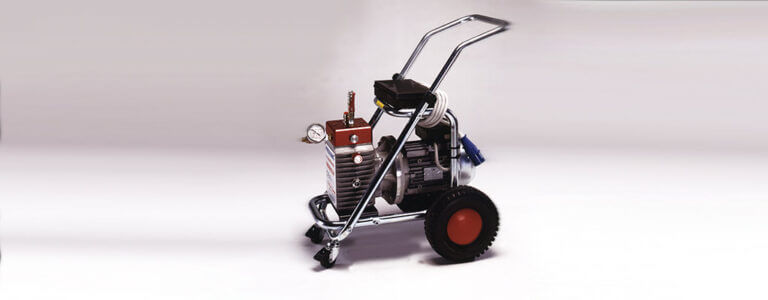
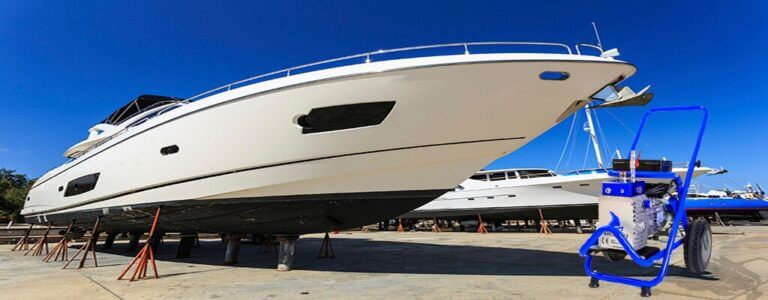
TECNOVER offers complete spray painting solutions – by far the highest-performing technology for applying a wide range of materials and products, including façade paints.
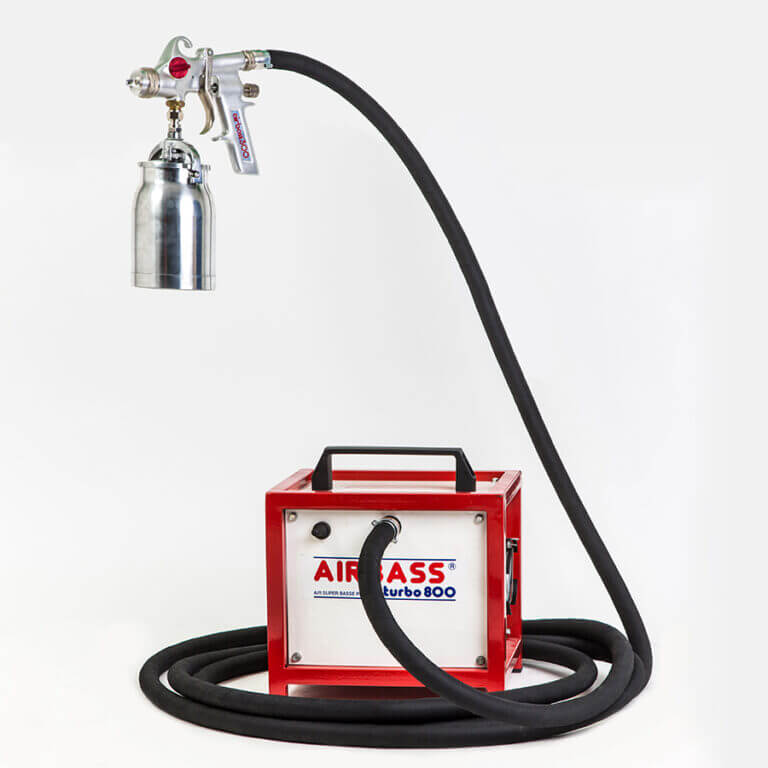
The airless method (i.e. without air) used by TECNOVER machines is an extremely high-yield technique that produces no mist – it is free of the overspray typical of compressed-air systems. The complete absence of air prevents the dispersion of particles in the form of mist and allows the paint to land on the surface without wasting product.
In this painting process, the material is delivered at high pressure (up to 250 bar) through a gun fitted with a tungsten carbide tip. The pressure drop at the tip’s outlet causes the atomisation of the material, which lands on the surface to be painted at low velocity. Thanks to the absence of carrier air and minimal product bounce-back, overspray is practically non-existent. The advantages? Extremely high yield with no paint dispersion, high application speed and maximum operator comfort.
What’s more, the airless method is also compatible with high-viscosity products and makes it easy to reach areas and corners that are hard to access with roller methods, whether the surfaces are rough or porous, vertical or horizontal. You can explore this painting technique further on our dedicated page.
For painting façades with quartz or siloxane paints, TECNOVER offers its Testarossa Superdiecimila and Testarossa Superquindicimila airless pumps (both also available with a petrol engine): an extremely powerful solution ideal for large surfaces. You can also discover the many accessories that can further simplify your work.
Would you like advice or technical support to exploit the full potential of TECNOVER airless pumps for painting building fronts? Get in touch with our specialists!