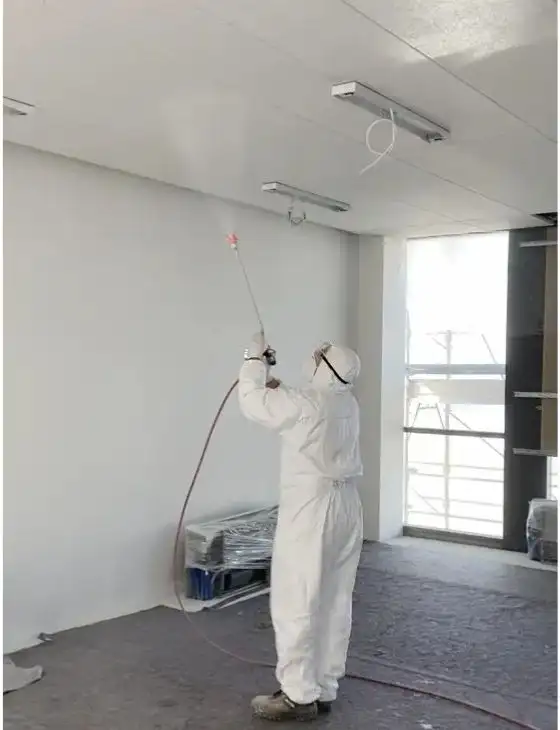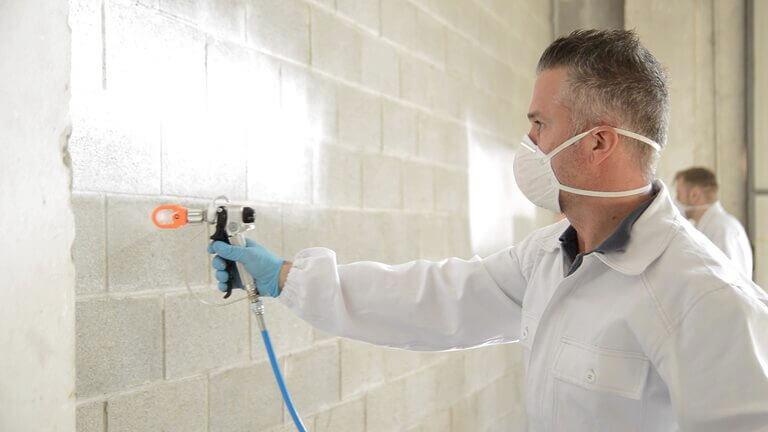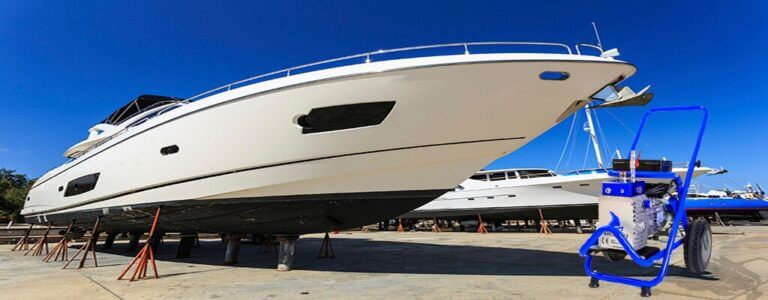
A diaphragm airless paint sprayer uses the controlled movement of a flexible diaphragm to draw in paint, pressurise it and deliver it to the spray tip without compressed air. With the right pressure, flow rate, filtration and tip, this system provides a steady spray pattern and continuous output across professional painting jobs.
Tecnover designs and manufactures diaphragm airless pumps in Italy for construction, metalwork, joinery, industrial maintenance and marine applications. Every Tecnover airless model uses diaphragm technology, with configurations for anything from light interior paints to quartz coatings, fillers, waterproofing products, intumescent paints, epoxy resins and gelcoat.
What is a diaphragm airless paint sprayer?
A diaphragm airless paint sprayer is a high-pressure painting system in which a flexible diaphragm changes the volume of the pumping chamber. As the diaphragm moves, the pump draws material from its container and pushes it through the fluid circuit towards the gun. The pressure drop at the spray tip atomises the coating and forms the spray fan.
Unlike a compressed-air spray system, the airless painting method does not use air to carry the product to the surface. This limits paint mist and material rebound, allowing more of the coating to reach the substrate. It also makes it possible to apply higher-viscosity products and cover smooth, rough, vertical and horizontal surfaces.
How does a diaphragm airless pump work?
The diaphragm moves in a controlled cycle. Its movement first creates suction, drawing the product into the pump, then pressurises the material and sends it through the hose to the gun. At the tip, the product is atomised into a fan whose width and delivery depend on the tip orifice and the working pressure.
Three variables must be considered together: pressure determines whether the product is atomised correctly, flow rate affects productivity, and the tip controls fan width and material delivery. If the pressure is too low, the spray pattern can become irregular. If the tip or filter is not suitable for the coating, the system may clog or apply the product unevenly.
For this reason, choosing the pump means assessing the complete setup, not the machine alone. Material viscosity and particle size, the surface, the required output, the hose, the filter, the gun and the spray tip all influence the result. Tecnover’s guide to choosing the right airless spray tip explains how the tip affects the spray fan and the quantity of product applied.
Advantages of diaphragm airless paint sprayers
Steady delivery during professional work cycles
The diaphragm generates a controlled flow that supports a stable spray pattern over extended applications. On a correctly sized professional machine, this means consistent delivery on façades, large surfaces and multi-coat systems.
Fast application with less paint mist
Airless atomisation uses product pressure rather than transport air. Compared with compressed-air spraying, this reduces overspray and limits the amount of material dispersed around the work area. The operator can cover large surfaces quickly while keeping the application uniform.
Practical maintenance and machine management
Diaphragm pumps are generally simpler to manage and maintain than piston pumps, particularly when the equipment is used frequently. A simpler pumping system can shorten routine service operations and help reduce downtime, provided the machine is cleaned correctly after use.
One technology for different professional applications
The same pumping principle can support very different jobs when the model and accessories are correctly matched to the coating. Tecnover’s range includes pumps for interior and exterior paints, enamels, technical coatings, resins and dense or filled products. The professional airless paint sprayer range makes it possible to select a machine according to measurable operating requirements.
Materials and applications for a diaphragm airless pump
Tecnover diaphragm pumps are used in construction, metal structural work, joinery, industry and the marine sector. The suitable materials depend on the pump model and configuration.
For interior painting, the smaller Testarossa models can apply enamels, paints and washable wall coatings. Higher-output models extend the range to exterior siloxane and quartz paints, asbestos encapsulants and epoxy resins for industrial floors. More demanding configurations can apply fillers, waterproofing membranes and intumescent coatings.
In marine work, the Marine M12 airless paint sprayer is intended for antifouling paints, gelcoat and epoxy resins. The full Tecnover applications overview groups the available solutions by sector and type of work.
Before spraying any material, check its viscosity, particle size and abrasiveness. Filled products need adequate passage, filtration and a compatible tip. Tecnover’s guide to materials for airless pumps provides a broader overview of coatings that can be applied with this method.
How to choose the right Tecnover diaphragm pump
The correct model depends on the product and the pace of work. Start with the coating manufacturer’s information, then compare maximum pressure, flow rate, compatible tip orifice, filtration and the length of the work cycle. Also consider the number of operators and whether the job requires different materials or colours at the same time.
Testarossa Superdiecimila
The Testarossa Superdiecimila is designed for medium and large surfaces. Its listed applications include wood and metal painting, interior and exterior coatings, epoxy resin flooring, and asbestos encapsulation and remediation.
Testarossa Superquindicimila
The Testarossa Superquindicimila is suited to large surfaces and can support two operators at the same time for interior painting. It is also intended for exterior quartz paints, spray-applied fillers and waterproofing work.
Testarossa Superventimila
The Testarossa Superventimila can apply two different products, or two colours, at the same time. Its applications include wood, metal, interior and exterior painting, epoxy flooring and asbestos encapsulation.
These examples show why model selection should be based on the actual material and job rather than on pump size alone. Tecnover also offers electric and petrol-driven versions for different site conditions.
Diaphragm or piston airless pump?
Both systems draw in coating, pressurise it and atomise it at the spray tip. The difference lies in how they generate pressure. A diaphragm pump flexes a membrane, while a piston pump uses a piston moving inside a cylinder.
A professional diaphragm pump is a strong choice when steady output, versatility and straightforward maintenance matter. Piston pumps are traditionally used for certain very viscous or heavily filled products that demand high driving force, but abrasive particles can increase wear and running costs. The final decision must consider pressure, viscosity, particle size, abrasiveness, service requirements and expected downtime.
For a direct technical comparison, read Diaphragm or Piston Airless Paint Sprayer: Which One Should You Choose?.
Accessories and maintenance affect the final result
A professional airless system includes the pump, hose, gun, filter and tip. Changing one component can alter flow, fan control or the pump’s ability to handle a dense product. Suitable airless pump accessories help configure the equipment for the material, surface and working distance.
Cleaning is equally important. After every use, remove product residue from the fluid circuit, filters, gun and tip before it dries. Regular inspection helps identify worn seals, filters or other components before they affect the spray pattern. The airless pump maintenance guide covers the main checks for extending equipment life, while Tecnover supplies original spare parts for airless paint sprayers.
Frequently asked questions about diaphragm airless paint sprayers
Does a diaphragm airless paint sprayer need compressed air?
No. The pump pressurises the coating and sends it to the spray tip, where the pressure drop atomises the material. Compressed air is not used to transport the product.
Are all Tecnover airless pumps diaphragm pumps?
Yes. Tecnover’s electric and petrol-driven airless pumps use diaphragm technology and are developed for professional applications with different materials and output requirements.
Can a diaphragm pump spray viscous materials?
Yes, if the pump and setup are correctly sized. Professional Tecnover models can apply quartz paints, fillers, waterproofing products, intumescent coatings and other dense materials. Flow rate, tip orifice, filtration, particle size and abrasiveness must all be checked before use.
Which sectors use diaphragm airless paint sprayers?
Tecnover lists applications in construction, metal structural work, joinery, industry and the marine sector. The model and accessories should be selected for the coating, surface and required productivity.
What should I check before choosing a diaphragm airless pump?
Check the material’s viscosity and particle size, the pump’s pressure and flow rate, the maximum compatible tip orifice, the filtration system, the surface area and the expected work cycle. For dense or abrasive products, also consider wear and maintenance requirements.
How often should an airless pump be cleaned?
Clean the fluid circuit, filters, gun and tip after every use, before the remaining material dries. The correct procedure depends on the coating and equipment configuration.
Choose a diaphragm airless pump for your application
Tecnover has designed and manufactured professional painting equipment in Italy since 1984. Its diaphragm airless range covers compact interior work, large construction sites, industrial coatings and marine applications, with original accessories, spare parts and technical support.
To identify the pump, tip and accessories that match your coating and working conditions, contact Tecnover for technical advice or a dedicated quotation.