In every sector where painting is essential, reducing product waste is a priority that directly affects operating costs, production efficiency and environmental sustainability. Excessive paint usage, dispersion of material into the environment (overspray) and heavy solvent consumption not only drive up running costs, but also increase environmental impact and lead to an irrational use of resources.
Airless technology offers a concrete answer to these problems. Thanks to a high-pressure spraying system that uses no compressed air (the term “airless” literally means “without air”), it delivers more precise, uniform material application, drastically reducing product dispersion and, in turn, unnecessary consumption. It is a solution that combines operational efficiency, cost savings and environmental care.
In what follows, we analyse the main advantages of airless pumps and outline the best strategies for reducing paint waste, optimising work processes and contributing to a more sustainable, responsible management of resources.
Airless technology: the solution for cutting paint waste
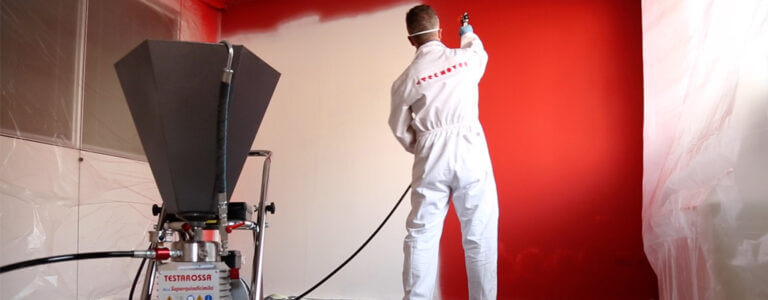
As noted, airless technology stands out for its ability to optimise painting processes while minimising waste. Unlike traditional systems that use compressed air to atomise the paint, airless pumps operate at high pressure (up to 250 bar), pushing the material directly through a spray tip. This process sprays the paint without the aid of air, eliminating the formation of the notorious “mist” (overspray) and ensuring that almost all of the product reaches the surface being treated.
Another key element of this technology is the tungsten carbide tip, renowned for its exceptional wear resistance and its ability to maintain excellent atomisation precision over time. Thanks to this component, the paint is broken into extremely fine particles and directed precisely at the surface, ensuring homogeneous, controlled application. The result? Less dispersion into the environment, significant product savings and lower operating costs – all with a finish quality decidedly superior to traditional techniques.
Airless technology is therefore the first, fundamental step towards a higher-performing, more sustainable and more rational approach to painting.
Precise, uniform application: less waste, better results
Even paint distribution is essential for reducing waste and achieving a quality finish. Airless pumps, thanks to their ability to atomise the product into extremely fine particles, allow you to apply paint (as well as many other types of product) in thin, uniform coats, avoiding build-up and runs that not only compromise the aesthetics of the final result but also mean pointless material consumption.
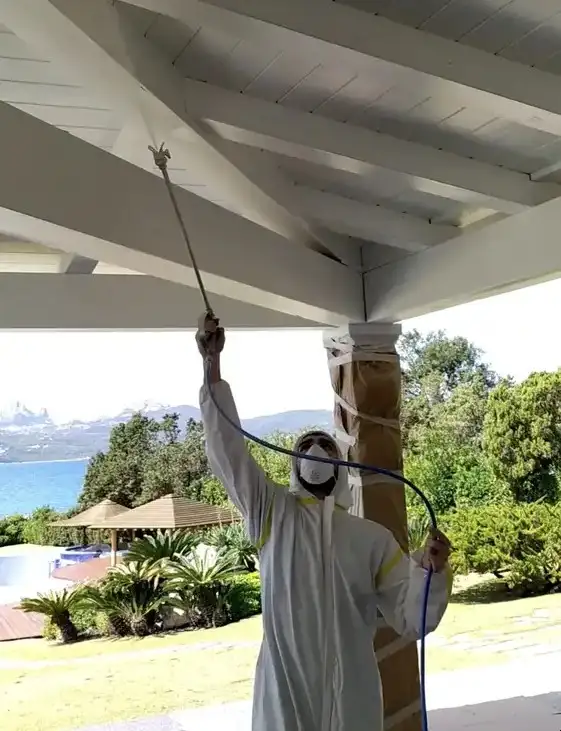
This level of precision proves particularly valuable in the most challenging situations, such as painting hard-to-reach corners, high ceilings or textured surfaces. Where rollers and brushes fall short, airless technology guarantees uniform application with no waste and shorter working times.
Optimising paint and solvent consumption
An often-overlooked aspect of managing painting operations is proper consumption planning. Airless pumps designed and manufactured by Tecnover let you prepare and use only the quantity of paint needed for each job, avoiding wasted, unused product at the end of the day. This approach offers a double benefit: on one hand, it reduces material purchasing costs; on the other, it limits product waste for disposal, with significant economic and environmental advantages.
Solvent management for equipment cleaning is also optimised. Thanks to the advanced technical design of Tecnover airless pump models, cleaning involves only the parts actually in contact with the paint, drastically reducing solvent usage.
The result is a faster, cheaper maintenance process with a lower environmental impact. Less product to dispose of, fewer solvents to use and less time spent cleaning: efficiency becomes a tangible value that positively affects every stage of the job.
The operational efficiency of airless pumps: speed and performance
Across the many fields of professional painting (for example, discover all the uses of airless pumps in construction!), productivity is essential for containing costs and optimising material use. Tecnover airless pumps are engineered precisely for this: covering large surfaces in less time, guaranteeing uniform application that minimises excessive paint use and reduces the need for touch-ups or subsequent corrections.
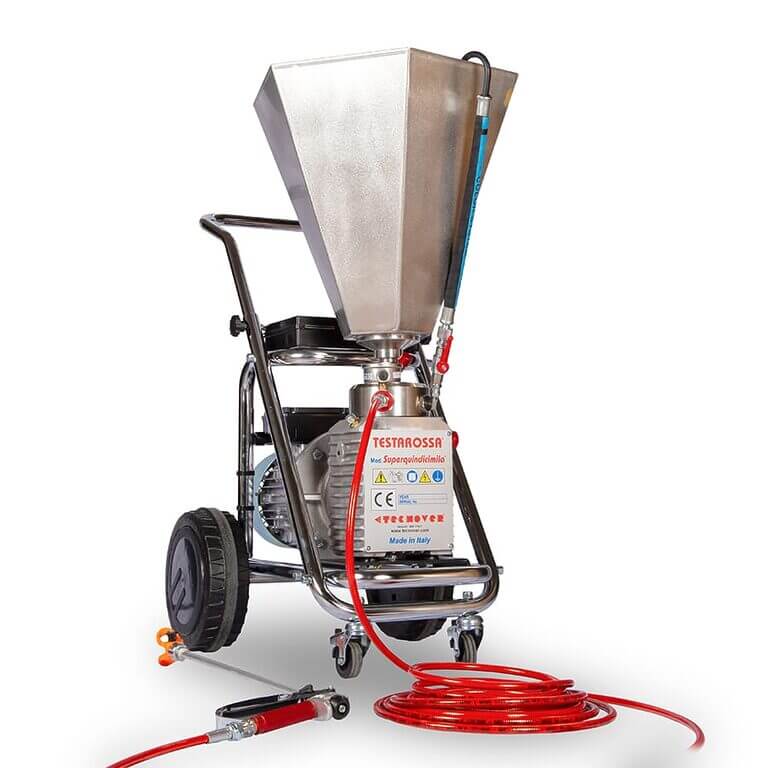
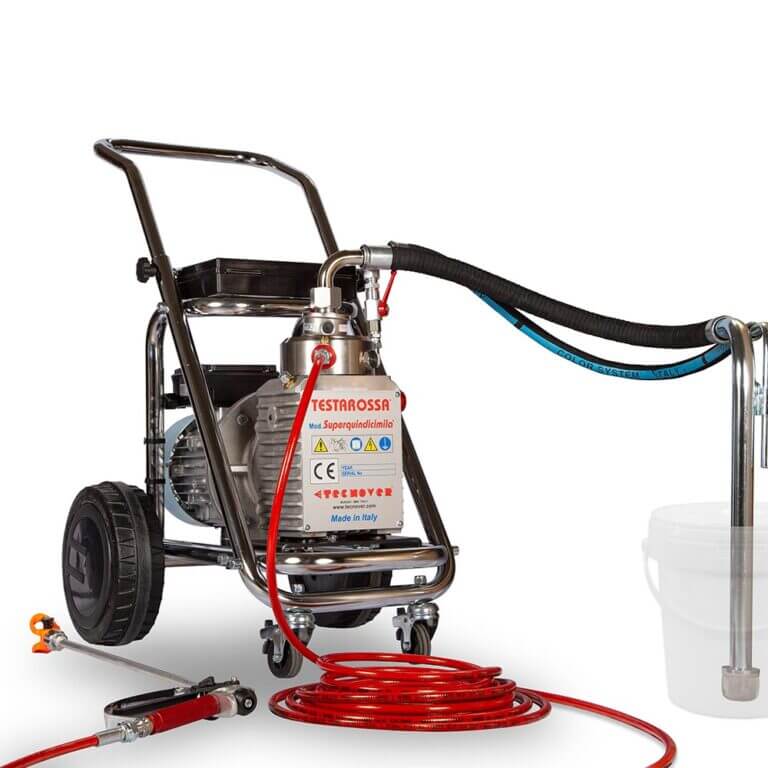
A concrete example is the Testarossa series, the flagship of the Tecnover range. These models offer high flow rates and a delivery reach of up to 90 metres (as with our Superventimila), allowing you to work even on large sites without constantly moving the equipment. This characteristic translates into greater operational continuity and real savings in time and resources.
Thanks to their speed of execution and consistent finish quality, Tecnover airless pumps let you complete jobs faster, reducing both paint consumption and labour costs: an investment that pays for itself in efficiency, impeccable results and reduced waste.
Sustainability as added value
As mentioned earlier: beyond containing costs, reducing paint waste also makes a concrete contribution to protecting the environment. By eliminating overspray and guaranteeing precise product application, airless pumps drastically limit the dispersion of paint into the air and workplaces, reducing pollution as well as health risks for operators.
This approach fits perfectly with Tecnover’s sustainability philosophy: for years the company has been committed to designing pumps made from extraordinarily high-performing yet highly recyclable materials, such as stainless steel, and to promoting solutions built to last. Tecnover airless pumps are engineered for an exceptionally long working life, reducing the need for frequent replacements and supporting a circular economy model based on product durability.
Thanks to these business choices and the vast range of spare parts and accessories, our professional airless pumps prove a sustainable investment that generates value over time for both businesses and the environment.
Best practices for reducing waste with airless pumps
We have explained why an airless pump, by its very nature, already guarantees optimal resource management. However, to maximise paint savings and achieve flawless application, it pays to adopt a few good operating practices.
The first concerns correct pressure adjustment: using only the minimum pressure needed for good atomisation significantly reduces overspray and, consequently, product waste.
Another key element is choosing the most suitable tip. Every type of paint and every surface requires a specific tip capable of delivering the correct flow rate and fan width: the wrong selection can lead to uneven distribution and pointless material consumption.
The distance and angle of the gun are also decisive: maintaining a constant distance of 25–30 cm and keeping the tip perpendicular to the surface produces uniform coverage, avoiding overlaps and waste.
Using the aforementioned dedicated accessories – tips and filters, professional guns, extensions and adaptors, high-pressure hoses, hoppers and suction systems (as well as filter socks, pressure gauges and maintenance kits) – significantly improves work quality, maximises pump performance and, consequently, further reduces material waste.
Finally, regular cleaning and proper maintenance of the pumps prevent clogging and malfunctions that could compromise the system’s efficiency.
One last tip: investing in operator training is essential to fully exploit the advantages of airless technology. Correct technique and operational awareness make the difference between a rough job and a truly efficient, sustainable application!
Want more information about Tecnover airless pumps and the entire product range? Contact our experts and discover the most suitable solution for your painting project.